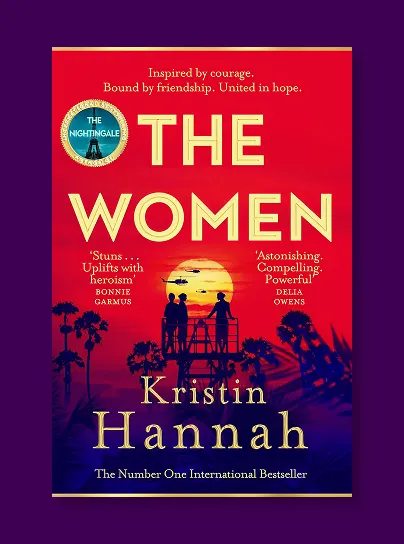
The Women
I understand now why several women reader friends kept suggesting I read this book.
The first half is intense. We follow a young, privileged, white woman as she enlists in the Army to serve as a nurse in Vietnam. We get a glimpse of what life was like for young women like her who grew up fast, saw things no human should have to see, lived their days standing in bloody mud, sweating profusely, working 16 hours at a push amid people screaming, sirens blasting, mortar fire, and a line of helicopters waiting to drop off the dead and wounded to a hospital in the middle of the jungle.
The next morning, when Frankie woke, the first thing she saw was Barb’s empty cot. The posters above the bed—Malcolm X and Muhammad Ali and Martin Luther King, Jr.—had been removed; all that was left were tufts of paper on thumbtacks pushed into the wooden walls. Things ripped away, pieces left behind. A metaphor for life in Vietnam.
The second half of the book shares what a typical return home was like for the men and women who served in that war. The American populous was very much against it. They knew they were being lied to about what was happening over there and why America was engaged in it at all. Ten years into that twenty year war, people began marching, protesting, and raising hell about it in whatever way they could. Unfortunately, that included disrespecting the people who had been sent to Vietnam.
Respecting the people who thought they were making an honorable choice by enlisting while also being against the war was too nuanced a position for most Americans. Instead of voting out of office politicians who were pro-war, they spat on returning soldiers. Instead of helping the returning service members unravel the trauma they’d taken on so they might influence other young people who were thinking of enlisting, they were refused service and yelled at in the street.
Ashamed. It hit Frankie hard, that word. She had let herself become ashamed; maybe it had started when she’d been spat on in the airport, or when her mother asked her not to talk about the war, or maybe as news of the atrocities began coming out.
Almost every civilian she’d met since coming home, including her own family, had subtly or overtly given her the message that what she’d done in Vietnam was shameful. She’d been a part of something bad. She’d tried not to believe it; but maybe she had. She’d gone to war a patriot and come home a pariah. “How do I get back to who I was?”
Rightfully, the majority of Americans were ashamed of what their military was doing in a tiny country half-way across the globe, but they handled that shame in ways that created rips in the fabric of society. Because of the way they were treated, more veterans have committed suicide after returning from Vietnam than were killed in the fighting.
The people who went to Vietnam suffered many times over. They were not told the real reason for the war, they were under-prepared for what they were going to experience, they were lied to about how many of them were dying or becoming wounded, they were not welcomed home (even, often, by their family members), they were inhibited from talking about what they’d experienced, and were often denied opportunities because of public sentiment.
The women who served suffered even worse as they were told to their faces that “there were no women in ’Nam” when they tried to get help for their PTSD.
Frankie knew there was no point arguing. She saw the way they looked at her, with a mixture of compassion and resolve. They were here to lift her out of despair; it was in the way they looked, the way they stood, the confident set to their chins. They wanted her to just get up, stand, start to walk. As if grief were a pool you could simply step out of. In reality, it was quicksand and heat. A rough entry, but warm and inviting once you let go.
As an American I knew all of this from history lessons, but to have it all brought to life in a narrative is something else altogether.
Although I felt the author trying too hard to pull on the heart-strings with certain plot twists and in certain passages, she handles subject matter that is based on real-life events so much better than novels in which she makes up the entire story.
Another book of hers that I reviewed was nearly unreadable for the stereotypes, cringe-inducing dialog, and unrealistic situations the characters found themselves in.
This novel, however, which was deeply researched, proof-read by veterans and which took her nearly 30 years to write, is a riveting read and does good work in spreading information about the women who went to war not to kill people but to save lives.
Read more reviews