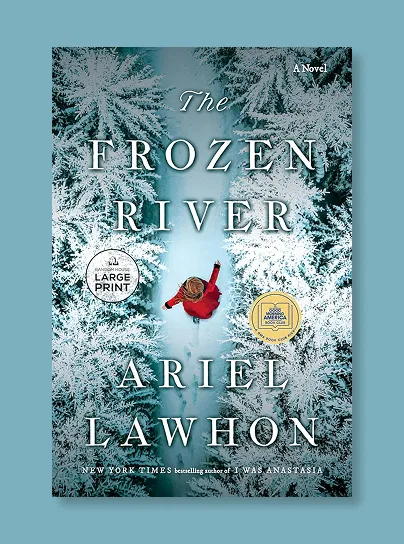
The Frozen River
An exceptionally well-imagined, quasi-historical narrative of an upstanding woman and midwife who lived in a small town in Maine in the late 1700s. Martha Ballard was an outspoken, medically-trained, literate woman who lived at a time when women were not educated. She was a remarkable, highly-principled, skilled healer and helper to her community.
Memory is a wicked thing that warps and twists. But paper and ink receive the truth without emotion, and they read it back without partiality. That, I believe, is why so few women are taught to read and write. God only knows what they would do with the power of pen and ink at their disposal.
This story covers a time-frame of 6 months during a particularly long and brutally cold winter and centers around a murder. Figuring out who murdered the man found in the frozen river isn’t the main topic of the story but it’s always sensed at the edges of whatever else is going on. There is a rape and the trials related to it, the wooing and courting of various young people, interactions between Martha and her family members, and the many births that Martha attends (some of which we read about in detail). On the last few pages of the book, we discover who murdered that man, but by then we don’t care because we know that he deserved it.
I sit in the water until my fingers prune, until the water goes from hot to warm, from warm to cool. I sit here, wet hair dripping over the curved rim of the tub, listening to the hustle and bustle of a household I do not have to manage today.
The running of this tavern is a family affair—much like it is for the Pollards—and I listen to the footsteps and muted conversations. The slamming of doors and the constant sound of children running up and down the stairs. Their laughter and happy bickering. Below me, above me, the sounds of life, of a big family, are everywhere.
Something I particularly enjoyed about this tale is the way the relationship between Martha and her husband was written. At that time in America women were property but Ephraim Ballard respected his wife, taught her to read and write, encouraged her to become a midwife and actively helped her raise their kids. Whether or not the historical Ephraim Ballard was actually like that or not matters little as it makes sense in this narrative that he would be that kind of man.
It’s a wonderful kind of chaos, and the mill smells of dust and woodsmoke, joy and sweat, whiskey and apple cider. It also smells of mating. Not sex per se, that is entirely different—though none of the parents here tonight are fool enough to think it couldn’t happen—but mating, that ritual common to all species. The flirting. Posturing. Choosing. Dancing. The occasional kiss, stolen in the dark, hidden from watchful eyes. It all has an ancient smell. Like dark soil and ripe fruit. Like humanity at the most basic, elemental level.
With one or two exceptions, we don’t know too much, historically, about any of the characters in this story. If it weren't for the daily diary kept by Martha Ballard, which was treasured and passed on by members of her family over generations and published by a small press in the 90s, history would have forgotten about this esteemed woman who delivered over 1000 babies and never lost a mother in her 27 year career.
She holds her breath, bears down, and another inch of bald head is revealed, the tips of little ears cresting beyond the confines of her body.
The story was sussed out from Martha’s journal entries and the author did us a huge favor by normalizing and smoothing out the language. In the afterward, she shares what one of Martha Ballard actual diary entries reads like: it's barely comprehensible.
Spoken and written English at that time was a mixed bag. Many settlers still spoke their native languages and heavily accented English, and American English itself was morphing as it grew away from British English. If the author hadn’t written this as she did, no one would read this book. She struck a very nice balance with the language in this. It feels right.
Lastly, I appreciate how animals play a role in this novel. From Brutus the angry horse to Tempest the silver fox. From Percy the falcon to Cicero the menacing half-dog half-coyote. The inclusion of the animals goes a long way in impressing upon us that people lived in and among nature at that time.
I really enjoyed this and whole-heartedly recommend it.
Read more reviews