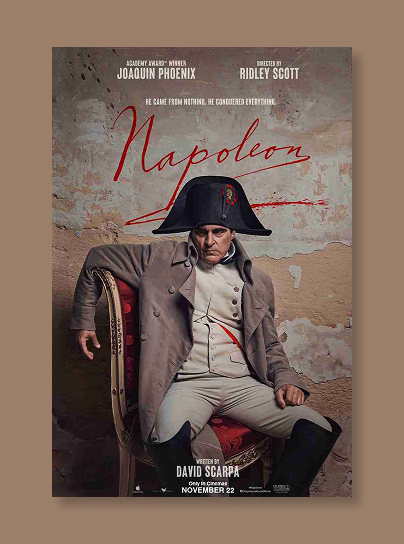
Napoleon
An intense biopic that manages to be both epic and extremely personal, this film brings to life a dramatic and vivid time in history when France was in the throes of restructuring how governmental power was distributed and revolutionizing what leadership looked like. This film is also, fundamentally, about a love between two people that never wavered, not even after the shape of their relationship changed.
Napoleon was at the right place at the right time. His common sense understanding of how to take advantage of an opponents' weakness allowed France to win some strategic battles that allowed Napoleon to very quickly move up in the military hierarchy. Around the time he became Brigadier General, he met Joséphine, who had two young children and a newly-dead husband.
The way the movie portrays her: clever, pretty, sexually-adventurous, and aware of her power we can easily understand how he fell in love with and married her.
Napoleon was, apparently, not adventurous at all in the bedroom, but they both understood that they needed to produce an heir or their relationship was in danger. These were the Golden Years of their relationship. When he was home they were actively trying to get pregnant and when he was out he was winning battles.
After six years, they had to divorce so Napoleon could marry someone with whom he could produce an heir. (Divorce was a concept brought about by the Revolution in 1792, although Napoleon later restricted divorce in 1804 and the monarchy completely abolished it in 1816.) The scene of the divorce is powerful: Napoleon is sobbing but is also insisting Joséphine go along with the proceedings. They were obviously miserable to have to separate in this way.
Vanessa Kirby has the gravity, wit, and smoldering sexuality to give Joséphine some depth, but it’s Joaquin Phoenix's portrayal of Napoleon that leaves an impression. He does a stellar job playing the role as stern, awkward, and passionate.
It would have been nice to have more insight into Joséphine and Napoleon's relationship, but maybe the Director’s Cut (which is over 4 hours long!) has more of those dynamics.
This film does two things: it shows that Napoleon moved through life getting what he wanted either by violent intimidation or by charisma. He was able to pull together troops in unlikely situations and keep his men on the field even when they were clearly overwhelmed or starved and freezing. But, ultimately, the wars he led cost around 3 million lives. He’s considered a military genius, but in today’s numbers, that’s 12 million dead men, women and children over a 12 year period!
The movie also shows that while Napoleon was ridiculously-ambitious, sloppy about his appearance, and had an inferiority complex that made him cruel, the center of his life was Joséphine. When she fell ill and died in 1814, Napoleon’s world fell apart. Soon after her passing, he lost definitively at Waterloo and that was the end of his military career.
One of the things I enjoyed about this movie is that some of it is told with voice-overs of the letters Napoleon and Joséphine sent to each other. The letters show how clever Joséphine was, and the depth of the respect and admiration they had for each other.
Read more reviews


